
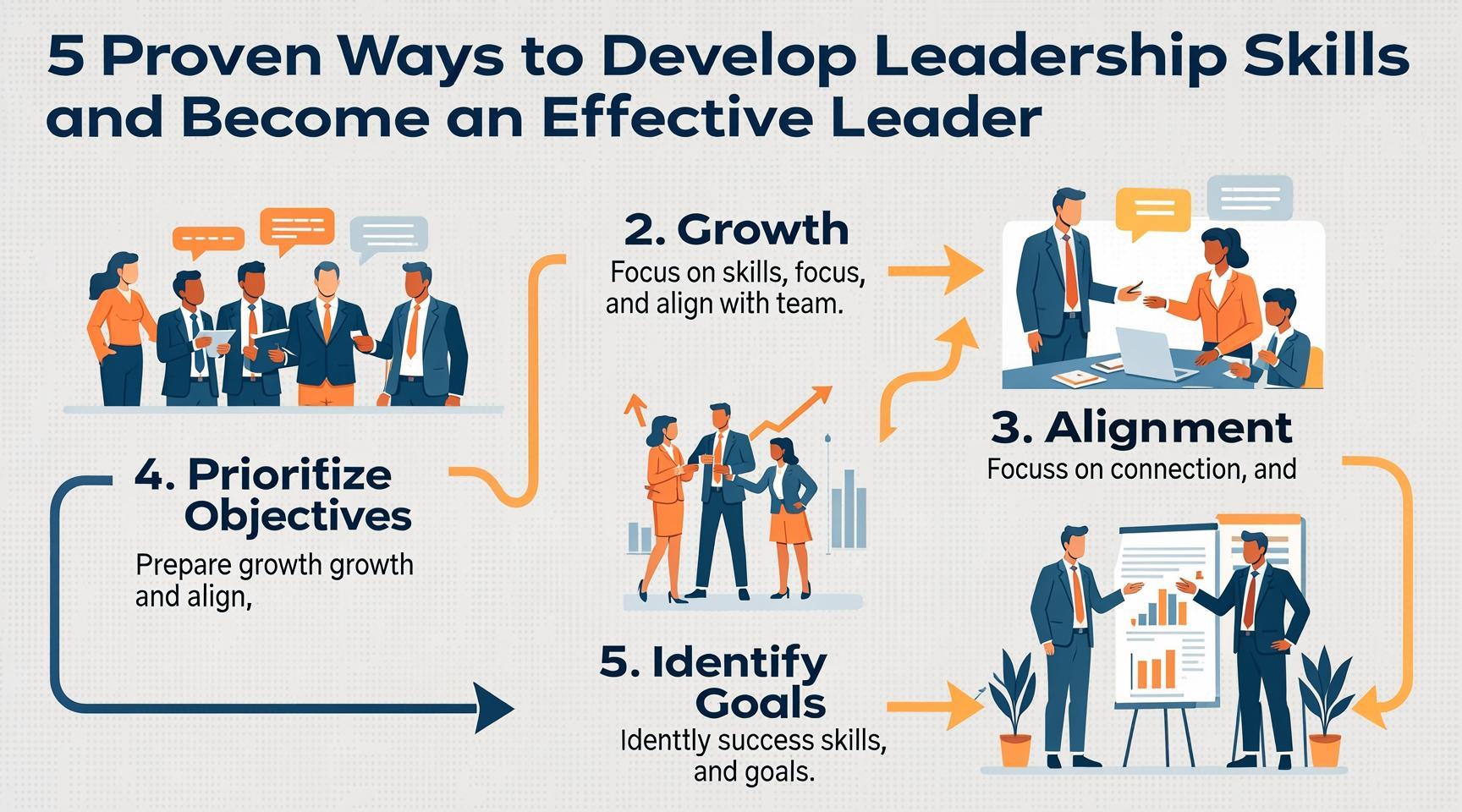
5 Proven Ways to Develop Leadership Skills and Become an Effective Leader

Are you planning to step into a leadership role but unsure if you have what it takes? The truth is, no one is born a leader. Leadership skills—communication, decisiveness, critical thinking—are built, not inherited. Whether you aspire to be a CEO, a team lead, or a mid-level manager, you can cultivate the abilities needed to lead with confidence. This guide breaks down five actionable strategies that will help you develop leadership skills from the ground up, sharpen them continuously, and apply them naturally in any situation.
1. To Lead, You Must First Follow
Every great leader was once a follower. They learned under mentors who modeled decision-making, accountability, and vision. Even after you assume a leadership position, the willingness to follow doesn’t disappear; it transforms. You follow mentors who paved your path. You follow industry leaders whose strategies inspire you. You also follow your own team members when they bring forward innovative ideas. Listening to subordinates builds trust and shows that you value their contributions—this reciprocity earns loyalty.
Who should you follow?
Other leaders in your industry to observe how they navigate change.
Thought leaders with revolutionary ideas that reshape business landscapes.
Subordinates who present well-thought-out plans; follow their process from start to finish to evaluate its potential.
Being a follower as a leader isn't a weakness—it's a way to stay grounded, open-minded, and collaborative.
2. Embrace Lifelong Learning
Leadership mastery is never complete. Markets evolve, teams change, and new methods emerge. To stay effective, you must accept that you are a perpetual student. Even when your skills are top-notch, there is always something better to learn and integrate. Lifelong learning keeps your mind sharp and your leadership adaptable.
Where do you learn from?
Other leaders within and outside your industry.
Your subordinates, who often possess fresh perspectives and untapped potential.
Everyday observation—spotting patterns, successes, and failures around you.
The key is to observe, absorb, and then adapt. Don't copy blindly; take inspiration and put your own spin on it. Give credit where it's due, and constantly update your knowledge base. This commitment to growth ensures you're never left behind.
3. Measure Your Limits
Effective leaders know their capacity. Taking on too much leads to burnout, poor decision-making, and health deterioration. Start small: gauge how much work you can handle without compromising quality or well-being. If you have bandwidth left, gradually add responsibilities—but always preserve time for rest and self-care, even during hectic periods.
Automate repetitive tasks: Many routine duties can be automated with modern tools. Scheduling, task assignments, and data entry can often run on autopilot, freeing you for high-level thinking.
Delegate to competent people: You can't do everything. Identify team members who possess the knowledge and reliability to execute tasks. Delegation isn't abdication; it's strategic. Match the task to the person with the right skills, provide clear instructions, and trust them to deliver. This keeps your workload manageable and empowers your team.
4. Sharpen Your Critical Thinking Skills
Leadership constantly presents complex problems requiring decisive action. Emotional reactions can mislead you; critical thinking anchors decisions in logic and evidence. This skill also helps you anticipate issues before they escalate. Examine potential problems by identifying causes and triggers, then devise preventive measures.
Track progress and think ahead: Regularly review project data. If you notice a recurring issue, dig into its root cause. Use "if-then" thinking: if a certain outcome occurs, what will you do? For example, if a product consistently underperforms despite adjustments, the logical decision might be to discontinue it. Conversely, if sales improve, you keep it. This forward-thinking approach eliminates guesswork.
Craft solutions, not just diagnoses: When a problem exists—say, a conflict between two employees—interview each privately, take notes, and synthesize a fair resolution. Explain why your solution is appropriate and how it prevents future disruption. Critical thinking transforms chaos into clarity.
5. Focus on Yourself as You Grow
Ultimately, your leadership ability is constructed by you alone. Mentors, experiences, and environments provide raw materials, but you must assemble them. Build a personal leadership philosophy: determine whether you lean democratic, transformational, or something else. Shed limiting beliefs and excuses that hinder decisive action. Know your strengths and weaknesses deeply.
Equally vital is self-care. Leadership can be all-consuming, but neglecting your mental and physical health sabotages long-term effectiveness. Protect time for exercise, relationships, and rest. A healthy leader makes sounder decisions and inspires greater confidence.