
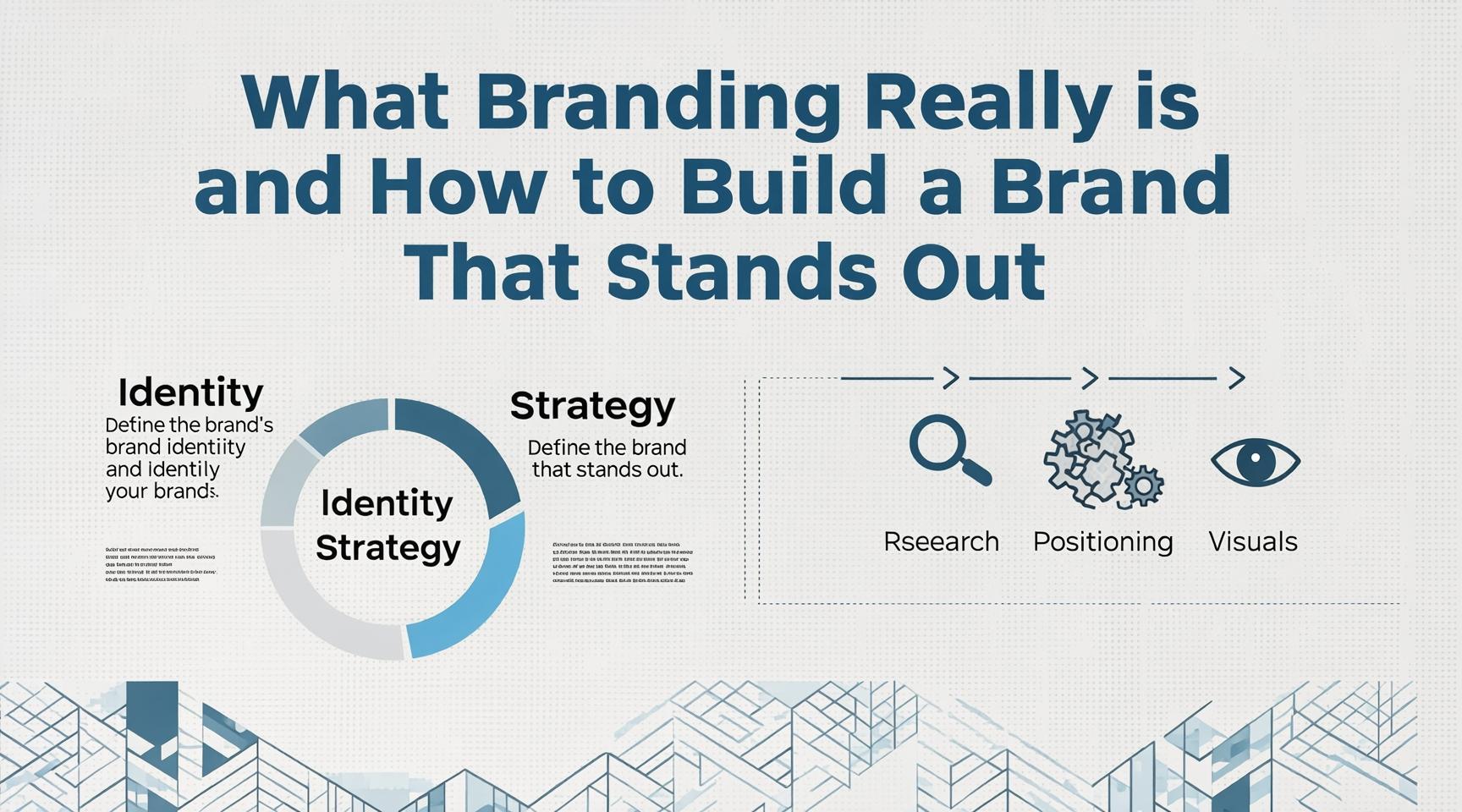
What Branding Really Is and How to Build a Brand That Stands Out

If your company lacks a strong brand, marketing becomes an uphill battle. Branding is the glue that holds your marketing together. It gives your business purpose and allows customers to instantly recognize your products and trust their quality. Yet, despite its importance, many businesses still don't understand what branding truly means—often reducing it to just a logo. In reality, branding encompasses everything that makes your business unique and consistent across every customer touch point. Here's how to build an identity that people get genuinely excited about.
What a Brand Actually Is
A brand is not just a logo. It is the sum of everything that distinguishes your business: your logo, design language, website, materials, mission statement, and the ethos that drives every decision. Your branding journey should start with your mission because it informs every other element.
A mission statement is a short sentence that communicates your purpose—not just what you do, but why and how you do it. It's the inspiring core of your company. Consider Amazon's mission: "It's our goal to be Earth's most customer-centric company, where customers can find and discover anything online." This is far more inspiring than a generic "we sell products online." A strong mission gives your business direction and scope to grow into new territories—like how Amazon created the Kindle to fulfill its mission in a whole new way. When crafted well, your mission statement directs every subsequent branding choice, from your logo to your web design.
Designing Your Brand Identity
Once your mission is clear, translate it into a visual identity. Start with two foundational elements: your company name and your logo.
Choosing a company name requires both creative and pragmatic thinking. A name should inspire and describe your business. It can be straightforward or abstract. Apple was chosen because Steve Jobs found the word "fun, spirited, and not intimidating"—perfectly aligning with the brand's positioning as a young, consumer-friendly challenger to established, stuffy competitors. Pragmatically, ensure the name is easy to promote, not already trademarked, and suitable for building a recognizable brand.
Creating your logo is one of the most critical steps. It's often the first thing new customers encounter. An effective logo must be original, communicate your brand's essence, and remain simple enough to reproduce across every medium—websites, packaging, letterheads, and more. It should work at any size, in both color and black and white, and even as a silhouette.
If you struggle to design one from scratch, tools like Brandrr can generate high-quality logo suggestions rapidly and let you customize the specifics. This saves significant time and delivers a finished vector file—a format that scales infinitely without quality loss and is easily editable for different contexts.
After establishing your logo, extend its elements into your web design and other materials. Incorporate the logo's color scheme, shapes, or imagery consistently so that every touchpoint feels part of the same family.
Why a Strong Logo Matters
In the online world, your logo is your face. Without it, you are one anonymous product in a sea of similar offerings. A recognizable logo makes your product stand out instantly, shapes how people perceive your brand, and creates a powerful first impression. Steve Jobs' original Apple logo—a detailed illustration—was quickly replaced by the clean, iconic shape we know today. The right logo, consistently applied, can command premium pricing and lasting loyalty. The wrong one can make you forgettable.
First Impressions Happen in Seconds
Research shows customers form a first impression of your business in about three seconds. In person, you dress to command respect. Online, your logo and visual identity serve that same function. A polished, professional appearance signals trustworthiness and competence. Tools that streamline logo creation allow you to guarantee that first impression is a good one without hiring expensive designers or guessing.
Conclusion
Building a strong brand goes far beyond a single visual. It starts with a clear mission, flows into a carefully chosen name and a versatile, meaningful logo, and extends into every piece of content and design you produce. When executed well, branding becomes the foundation that makes your business recognizable, trusted, and capable of challenging even the biggest names in your niche.